Can we talk? Dialogue, and how to get it right.

ConversationWriting realistic dialogue is tricky. It’s a skill that  comes naturally to those lucky people who have an ear for convincing dialogue and can produce it effortlessly, but most of us have to practice, listen, then practice some more. This is a common problem for new writers (and some more experienced ones, too) who want to produce natural and lifelike exchanges between characters without sounding clunky, over-dramatic or plain wooden. I’ve talked about this before but some things bear repetition, so a revisit might be useful. Continue reading

Starting Points

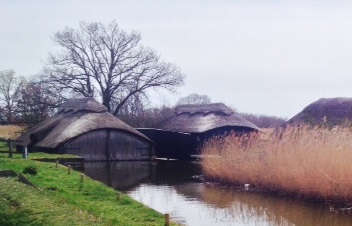
Hickling thatched boathousesRecently I was prompted to revisit the start of my otherwise completed second novel. I am indebted to Cate Hogan http://bit.ly/1QIYuhd  for her insights into creating interesting characters, which brought about this reassessment. It made me think that the introductory chapters of the novel should be more dynamic. I was reminded of some writerly advice along the lines of, if the story doesn’t get going until chapter three, that’s where you should start. The week before submission, I decided the beginning of the novel needed a complete overhaul. Continue reading

Verbification, or how to tighten up your writing

DaisyThere’s no doubt about it, the current trend for verbification – using nouns as verbs – can have a profound effect on our writing. We have social media to thank for some of this – the requirement to express complex ideas in 140 characters was bound to have a minimising effect – though verbification has been around a lot longer than Facebook and Twitter. The knock-on effect is that our use of language has changed subtly to accommodate this phenomenon. We parent, we text, we friend. We used to set a trend, now we are trending. Our writing group used to offer criticism, now we critique. Once, I wrote pieces for this blog. Now I simply blog. The noun has become the verb.

Worryingly, hunting for antiques has become antiquing, in the USA at least. I’m happy to report that we haven’t succumbed to this practice yet in the UK. Continue reading

Character Reference

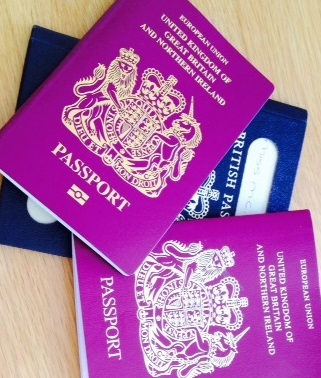
passports1

I’ve just had my passport photograph updated – who is that woman? She looks like she’s had an interesting life – it’s certainly left its mark. Which ties in nicely with this week’s theme – creating characters.

People-watching can be very fertile ground and there are plenty of opportunities for observing personality traits and characteristics in colleagues, friends and total strangers in the course of your working life and leisure activities.

I’ve been lucky to work in some colourful and exciting environments, full of large than life personalities, who transfer easily onto the page, albeit with a little tweaking. Here are some possibilities for you to consider: Continue reading

Double Dilemma

Two dilemmas present themselves as I get close to finishing my new novel. The first one was prompted by a song on the radio that gave me an idea for a lovely little connection between an event and a character. The second one was a great plot twist that came to me in a dream. Really. Continue reading

Emotional Roller Coaster

We did a very good exercise at the writing group recently – write a short scene where a character expresses an extreme emotion, such as anger, joy, grief, passion, impatience. Sounds easy enough, doesn’t it? But we’d been instructed to show the emotion, rather than tell it. So “she was frightened” was never going to cut it. We had to create a feeling with words. Continue reading

How Old is Young?

I’ve just finished reading Rosamunde Pilcher’s bestselling novel The Shell Seekers and while I would still recommend this beautifully written saga about family relationships I can’t help feeling that the characters display some very old-fashioned ideas, as if they inhabit a different era to the one portrayed. And here’s why: Continue reading

So many books….so little time

Are you a carry-on-to-the-bitter-end reader, or a mid-chapter abandoner? I used to read every book I started from cover to cover, regardless of whether or not I was enjoying it, because I reckoned that I owed it to the author to finish what they’d written before I rushed to judgement. Not anymore. Continue reading

Short Story Writing

We’ve been doing a lot of work on what makes a satisfying short story at the writing group, and here’s an easily digested summary of what we’ve discussed.

A memorable short story will say something about the human condition, encapsulating one idea succinctly, with each scene building towards a crisis point, followed by a point of realisation or moment of clarity. The issue you address at the start of the story should be the issue that is resolved at the end.

A good short story starts in the middle of the action and as close to the climax as possible. At the end of the story, the main character should be in a better place than at the beginning, enabling them to move forward.

Once you’ve chosen an idea, remember these basic steps: Continue reading

Sagging Middle Syndrome: are you a victim?

We’ve all been there, and I don’t mean that rapidly expanding rear end through far too much sitting and writing (and eating snacks, let’s be honest) and not enough exercise. I mean that space between the opening of our novel and its climax, when we run out of steam.

Continue reading